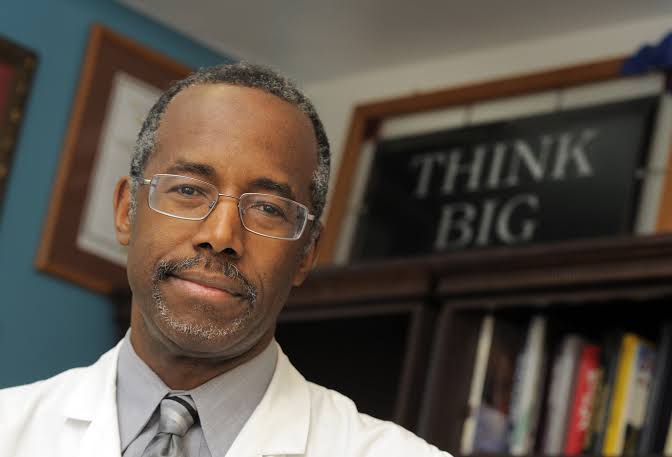
In Detroit, Michigan, in 1951, Ben Carson was born into circumstances that could have easily defined his future. Raised by a single mother who had limited formal education, his early life was marked by poverty, struggle, and low academic performance. At one point, he was considered one of the worst students in his class.
The labels came early. Slow. Behind. Unlikely to succeed.
But his mother refused to accept that narrative.
She introduced discipline where there was none. She limited television, required reading, and pushed her sons to think beyond their environment. At first, it was uncomfortable. It felt forced. But over time, something began to change. Curiosity replaced frustration. Effort replaced excuses.
Ben Carson began to improve.
Slowly at first, then consistently.
He went from the bottom of his class to the top, not because things suddenly became easy, but because he learned how to think, how to focus, and how to persist when results were not immediate.
He later attended Yale University and then earned his medical degree from the University of Michigan Medical School. These were not just academic achievements, they were milestones that reflected a complete transformation from where he began.
But the real test was still ahead.
Carson entered the demanding field of neurosurgery, a space where precision, discipline, and mental strength are non-negotiable. Over time, he built a reputation for excellence at Johns Hopkins Hospital, eventually becoming one of the youngest directors of pediatric neurosurgery in the United States.
His name became globally recognized after leading the first successful separation of conjoined twins joined at the back of the head, a procedure known as occipital craniopagus separation. It was a high-risk, complex surgery that required not just skill, but courage and belief in possibility where failure could have been final.
But his journey was not without internal battles.
He has spoken openly about struggles with anger in his early years, moments where he had to confront his own behavior and make conscious decisions to change. These were not public victories. They were private battles that shaped his character.
Like many influential figures, his later life included public scrutiny, especially during his involvement in politics and government service. Different opinions, criticisms, and debates followed. But beyond all of that, his foundational story remains one of transformation.
From a child labeled as incapable, to a surgeon trusted with some of the most delicate procedures in medicine.
This is where the real lesson becomes clear.
At Skulearn, we bring stories like this so you understand that your starting point does not define your ceiling. Skulearn exists to help you reshape your thinking, build discipline, and unlock potential that may not yet be visible to others.
Ben Carson’s journey teaches something powerful. You can begin behind and still finish ahead. You can struggle and still rise. You can carry scars, internal and external, and still build a life that impacts others at the highest level.
Because in the end, transformation is not about where you start. It is about what you are willing to change, consistently, over time.
And that leaves you with a question worth holding onto.
What if the version of you people doubt today is not your final version?
VISIT: App.skulearn.com