How a young programmer turned a simple idea into one of the most influential technology companies in history, and what his extraordinary journey teaches the next generation about innovation, ambition, failure, leadership, and purpose.
Imagine being 19 years old, sitting in a university dormitory, surrounded by textbooks, assignments, and the ordinary pressures of student life. While most students are thinking about their next examination, weekend plans, or how to secure a good job after graduation, you are thinking about something entirely different.
You have an idea.
An idea that could change how human beings communicate. An idea that could connect people across continents, transform businesses, influence elections, create new industries, and eventually become a platform used by billions.
Now imagine that you build it, and within a few years, you become one of the youngest billionaires in history.
That is the extraordinary story of Mark Zuckerberg.
But here is what makes his journey even more interesting: the young man who helped connect billions of people to the world had to learn some of the hardest lessons about responsibility, trust, competition, and leadership along the way.
His story is not simply about becoming rich. It is about recognising an opportunity before the world fully understands it, developing the technical skills to pursue it, taking enormous risks, surviving public criticism, and continuously reinventing a business in an industry that never stops changing.
And for every young person who has ever wondered whether an idea in their head could become something meaningful, this is a story worth knowing.
Mark Elliot Zuckerberg was born on May 14, 1984, in White Plains, New York, United States. He grew up in Dobbs Ferry, in a family that valued education and intellectual development. His father, Edward Zuckerberg, was a dentist, while his mother, Karen, worked as a psychiatrist.
Unlike many young people who discover technology much later in life, Mark developed an interest in computers remarkably early.
His father introduced him to programming, and Mark began experimenting with software while still a child. He was not simply interested in playing computer games. He wanted to understand how they worked and, more importantly, how he could create his own.
One of his early programming projects was a messaging application called ZuckNet, which allowed computers in his father's dental office and their home to communicate. He also developed computer games and experimented with software that could perform different tasks.
As he grew older, his curiosity became more serious.
During his high school years at Phillips Exeter Academy, he developed Synapse, a music recommendation program that learned users' listening preferences. The project attracted interest from technology companies, including Microsoft and AOL, but Zuckerberg chose to continue his education rather than immediately pursue employment opportunities.
Think about that.
While many teenagers were still discovering their interests, he was already developing software, experimenting with ideas, and building things that attracted the attention of established technology companies.
His advantage was not simply access to a computer. It was curiosity, experimentation, and the willingness to learn by creating.
That distinction is important.
A computer in the hands of one person can become a source of entertainment. In the hands of another, it can become a tool for building businesses, solving problems, and creating opportunities.
The difference often begins with how a person chooses to use what they have.
In 2002, Zuckerberg entered Harvard University, where he studied computer science and psychology.
It was an interesting combination.
Computer science helped him understand technology, while psychology gave him an opportunity to explore human behaviour. He was interested in how people interacted, how information moved, and how technology could make communication easier.
He did not yet know that these interests would eventually become the foundation of a global business.
But the signs were already there.
The first big mistake: Facemash At Harvard, Zuckerberg began experimenting with ideas that attracted attention, but not always for the right reasons.
In 2003, he created a website called Facemash. It allowed students to compare photographs of fellow students and vote on who they considered more attractive.
The website became extremely popular almost immediately, but it also generated serious controversy. Zuckerberg had obtained photographs from Harvard's student directories without permission, raising questions about privacy, consent, and the appropriate use of personal information.
Harvard shut the website down.
Zuckerberg faced disciplinary scrutiny over the incident.
For a young programmer, this was an important early lesson: just because technology can be built does not mean it should be built without considering its consequences.
Facemash demonstrated his technical ability and understanding of how online platforms could attract attention. But it also exposed a weakness that would become an important issue throughout his later career: technology must be accompanied by responsibility.
He could have allowed the controversy to discourage him from experimenting. Instead, he continued developing software.
This time, his next idea would be much bigger.
The birth of Facebook: A dorm-room idea that changed the world On February 4, 2004, Mark Zuckerberg launched TheFacebook from his Harvard dormitory.
He was just 19 years old.
The original idea was straightforward: create an online directory where students could establish profiles, connect with other students, share information, and discover people within their university community.
At the time, social interaction on the internet was developing rapidly, but there was still enormous room for innovation.
TheFacebook initially served Harvard students. Its popularity grew quickly, and demand soon extended beyond the university.
Zuckerberg did not build the original platform entirely alone. He worked alongside fellow Harvard students Dustin Moskovitz, Eduardo Saverin, and Chris Hughes, who played important roles in the company's early development. Other collaborators and advisers also contributed to its growth.
Within a relatively short period, the platform expanded to other universities.
By the end of 2004, Facebook had reached approximately one million active users.
Pause and consider the significance.
A website initially created for a university community was becoming something much larger. It was moving beyond a campus directory and becoming a new way for people to maintain relationships, communicate, and share their lives.
Zuckerberg recognised something important: people did not necessarily want another complicated technology product. They wanted an easier way to connect with other people.
That insight became one of the foundations of Facebook's success.
In 2005, the company dropped "The" from its name and became Facebook.
The business also secured important investment. Accel Partners invested approximately $12.7 million in 2005, giving the company resources to expand its technology, operations, and reach.
By 2006, Facebook had opened registration beyond universities, allowing people with valid email addresses to join.
The company was no longer simply a university project.
It was becoming a global business.
The decision that changed his life: Leaving Harvard One of the most discussed decisions in Zuckerberg's journey was leaving Harvard.
He did not graduate from the university.
As Facebook expanded, he faced a choice: continue his studies and pursue the traditional academic route, or dedicate himself fully to the business that was growing faster than he could have imagined.
He chose Facebook.
In 2004, he moved the operation to Palo Alto, California, placing the young company closer to Silicon Valley's technology and investment ecosystem.
This was a major risk.
He was abandoning the familiar structure of university life to pursue an uncertain business future. Facebook could have failed. Investors could have withdrawn. Competitors could have overtaken the platform. The technology industry was full of companies that attracted excitement but never achieved lasting success.
Yet Zuckerberg believed the opportunity was worth pursuing.
This decision should not be misunderstood as advice for every student to abandon education.
Quite the opposite.
Zuckerberg's journey demonstrates the value of developing useful skills, understanding opportunities, and making informed decisions. His programming knowledge, independent projects, academic exposure, and early experience helped prepare him for the responsibility he eventually accepted.
Leaving university was a particular decision made under particular circumstances. It was not a magic formula for success.
The lesson is not to drop out of school. The lesson is to develop yourself so seriously that you are prepared when an extraordinary opportunity arrives.
How Facebook became a global technology empire Building a popular website is one thing. Turning it into a sustainable, profitable global company is something entirely different.
This is where Zuckerberg's entrepreneurial journey becomes especially interesting.
Facebook grew because its leadership continued expanding the product and its business model.
One of its most important decisions was to build a business around advertising.
Rather than charging ordinary users to join, Facebook offered free access and generated revenue by allowing businesses to advertise to audiences on the platform.
This model created an enormous commercial opportunity.
Businesses could reach people based on their interests, demographics, and online behaviour. Small companies could advertise alongside major international brands. Entrepreneurs could promote products without needing the budgets associated with traditional television and print advertising.
Facebook became a major part of the digital marketing industry.
But Zuckerberg understood that remaining successful required more than one popular platform.
He needed to anticipate where technology and user behaviour were moving.
That meant investing in new products, acquiring competitors, and entering markets that could become important in the future.
The Instagram acquisition In 2012, Facebook acquired Instagram for approximately $1 billion in cash and stock.
At the time, Instagram was a relatively young photo-sharing application with a rapidly growing audience.
The acquisition was a major strategic decision. It gave Facebook ownership of a platform that was developing a strong identity around mobile photography and visual communication.
Today, Instagram is one of the world's most influential social media platforms.
The acquisition illustrates an important business lesson: sometimes, sustainable growth comes not only from building new products internally but also from recognising promising companies and integrating them into a larger vision.
The WhatsApp acquisition In 2014, Facebook announced its acquisition of WhatsApp in a transaction initially valued at approximately $19 billion.
WhatsApp had become one of the world's most popular messaging services, particularly in countries where mobile communication was rapidly expanding.
The acquisition strengthened Facebook's position in global communication.
It also demonstrated Zuckerberg's willingness to make enormous investments in products that he believed would remain important over the long term.
The birth of Meta In October 2021, Facebook changed its corporate name to Meta Platforms.
The rebrand reflected a strategic ambition that went beyond traditional social networking.
Zuckerberg wanted to invest heavily in virtual reality, augmented reality, and the emerging concept of the metaverse, a collection of interconnected digital experiences where people could interact through virtual environments.
This was a bold move.
The company was effectively declaring that it did not want to be known only for the social media products that had made it successful. It wanted to help shape the next generation of computing.
However, the strategy also brought enormous financial pressure. Reality Labs, Meta's division responsible for virtual and augmented reality products, accumulated substantial operating losses.
The metaverse vision did not become the immediate commercial revolution Zuckerberg had hoped for.
This is a significant part of his story because it demonstrates that even the most successful entrepreneurs can make expensive bets that take longer than expected to deliver results.
In business, vision matters. But vision must be supported by evidence, financial discipline, execution, and the willingness to reassess assumptions.
The challenges, controversies, and scars behind the success It would be misleading to tell Mark Zuckerberg's story as though every decision he made was celebrated or every achievement came without consequences.
His leadership has faced serious criticism.
As Facebook grew into one of the world's most influential communication platforms, questions emerged about privacy, misinformation, political advertising, harmful content, competition, and the company's responsibility towards users.
One of the most significant controversies involved Cambridge Analytica.
In 2018, revelations emerged that personal information connected to millions of Facebook users had been improperly shared through a third-party application and subsequently used in political profiling activities.
The scandal generated worldwide outrage and intensified concerns about how technology companies collect, manage, and protect personal information.
Zuckerberg testified before the United States Congress, facing difficult questions about Facebook's privacy practices and responsibilities.
It was a defining moment.
The young programmer who had once built a website in a university dormitory was now being questioned by lawmakers about the influence of a platform used by billions.
The pressure was no longer simply about developing better software or attracting more users.
It was about accountability.
His company also faced investigations, regulatory action, and continuing criticism over how its platforms affect public discourse, young users, and society.
These challenges are important for young people to understand.
Success does not automatically make every decision correct. Wealth does not eliminate responsibility. Innovation does not excuse harm.
A person can build something extraordinary and still have important lessons to learn about the consequences of their decisions.
At Skulearn, we believe this is an essential part of studying successful people. We should not worship their achievements or ignore their mistakes. We should learn from both.
The discipline and business principles behind Zuckerberg's rise What can young entrepreneurs, students, creators, and aspiring innovators learn from Mark Zuckerberg?
His journey reveals several important principles.
- Start creating before you feel completely ready.
Zuckerberg's early projects were not billion-dollar businesses. They were experiments.
Synapse, ZuckNet, CourseMatch, and Facemash were all different stages of his development as a programmer.
Not every project was successful or appropriate, but each demonstrated a willingness to build and experiment.
Young people often spend too much time waiting for perfect conditions.
They wait for expensive equipment, funding, permission, the right connections, or complete confidence.
But many valuable skills develop through practical work.
Start learning. Start experimenting. Build something small. Improve it.
- Learn to identify problems people actually care about.
Facebook succeeded because it addressed a recognisable human desire: connection.
Zuckerberg did not simply build a product because he knew how to write code. He developed a platform that responded to how people wanted to communicate and interact.
This is a powerful entrepreneurial principle.
Do not fall in love only with your idea. Understand the problem it solves.
- Think beyond the first version of your idea.
Facebook did not remain a university directory.
It expanded into a social network, advertising platform, communication ecosystem, and eventually a broader technology business under Meta.
Successful businesses often evolve because their founders recognise that the market changes.
- Build a team.
Facebook's growth involved programmers, investors, executives, designers, engineers, marketers, and countless other professionals.
No major global technology company is built by one person working alone.
Talent matters, but so does the ability to attract, develop, and coordinate other talented people.
- Take calculated risks.
Leaving Harvard, relocating to Silicon Valley, pursuing major acquisitions, and investing in emerging technologies were decisions with substantial consequences.
Risk-taking should not be confused with recklessness.
A calculated risk involves understanding the opportunity, evaluating the downside, preparing for uncertainty, and making a decision with available evidence.
- Keep learning when you become successful.
One of the most dangerous moments in any entrepreneur's journey is becoming comfortable.
A successful product can create the illusion that the future will continue looking like the past.
Zuckerberg's investments in mobile technology, Instagram, WhatsApp, virtual reality, and artificial intelligence demonstrate an ongoing effort to anticipate technological change.
Not every bet succeeds, but the willingness to keep learning is important in a rapidly evolving industry.
- Remember that responsibility grows with influence.
Perhaps the most important lesson is that the bigger your platform becomes, the greater the responsibility attached to your decisions.
A small mistake in a small project may affect a handful of people. A mistake in a global platform can affect millions.
Leadership requires more than ambition. It requires judgement, accountability, ethical thinking, and an understanding of consequences.
Beyond Facebook: Building a legacy beyond technology There is another side of Zuckerberg's journey that deserves attention.
In 2012, he married Priscilla Chan, a paediatrician and education advocate whom he had met while studying at Harvard.
Together, they established the Chan Zuckerberg Initiative in 2015.
The organisation focuses on areas including education, scientific research, health, and community development. Its ambition is to use resources, technology, and collaboration to address significant social challenges.
One of its major areas of interest is improving education and supporting scientific research.
This is particularly interesting because it connects Zuckerberg's success in technology with an opportunity to contribute to areas that affect future generations.
His story also raises an important question for every ambitious young person:
What will you do with the opportunities you create?
Will your success end with personal comfort, or will you use your resources, knowledge, and influence to create opportunities for other people?
Money can provide comfort. Influence can create access. But purpose determines what you choose to do with both.
The next chapter: Artificial intelligence and the future of technology Mark Zuckerberg's story is still being written.
Meta has increasingly positioned artificial intelligence at the centre of its future strategy, investing in AI models, computing infrastructure, smart glasses, and new ways for people to interact with technology.
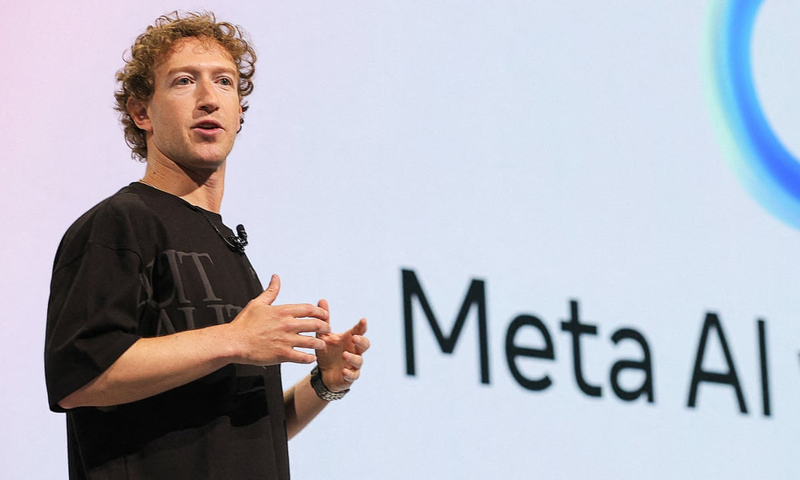
Its Llama family of AI models and its Meta AI assistant represent part of this ambition.
The company is also developing wearable technology through its smart-glasses partnerships and continuing its work in virtual and augmented reality.
This is an important reminder that the technology industry is never static.
The companies dominating one generation can lose their relevance in another if they fail to adapt.
Consider how quickly the world has moved from desktop computers to smartphones, from traditional websites to social media, and now towards artificial intelligence.
Zuckerberg understands that the company he founded in 2004 must continue evolving if it wants to remain relevant in the decades ahead.
Whether every investment succeeds remains to be seen. But the ambition to participate in shaping the next technological era is central to Meta's current strategy.
What Mark Zuckerberg's story means for the next generation There is something particularly powerful about studying someone who began with a skill that many young people today can learn.
Programming.
You do not need to be born into a billionaire family to learn how to code. You do not need to own a multinational company to understand entrepreneurship. You do not need millions of followers to begin creating something useful.
You need curiosity, knowledge, discipline, and the willingness to start.
Imagine a young student in Nigeria, Ghana, Kenya, South Africa, or anywhere else in the world, sitting with an ordinary laptop.
That student may be learning software development today.
Perhaps they are creating a small application. Perhaps they are designing a game. Perhaps they are experimenting with artificial intelligence or building a website for a local business.
Nobody knows their name yet.
Nobody is interviewing them.
Nobody is celebrating their work.
But they are learning.
They are experimenting.
They are developing the ability to solve problems.
And perhaps, somewhere in that process, they will discover an idea that changes their community, their country, or even the world.
That is why Mark Zuckerberg's journey matters beyond Facebook.
It demonstrates that the future is not reserved exclusively for people who already have power, money, or influence.
It is also shaped by people who develop useful skills, recognise opportunities, and have the courage to create.
However, let us remember something important: not every young programmer needs to become a billionaire. Not every student needs to establish a technology company. The world needs excellent teachers, doctors, engineers, farmers, artists, researchers, entrepreneurs, and responsible leaders.
The real goal is not to become another Mark Zuckerberg.
The real goal is to discover what you can become, develop your abilities, and use them to make a meaningful contribution to the world.
At Skulearn, we believe the next great innovator could be reading this story right now. At Skulearn, we are not simply interested in telling young people that successful people exist. We want to help them understand how success is developed, what it demands, what can go wrong, and how they can apply those lessons to their own lives.
We are building a school of purpose and personal growth where learning goes beyond the traditional classroom.
Through Skulearn Coaches, we want young people to access guidance, mentorship, accountability, and practical personal development.
Through Skulearn Role Models, we introduce learners to extraordinary individuals whose journeys provide valuable lessons in leadership, innovation, resilience, creativity, and achievement.
Through Skulearn Books, we encourage a culture of reading, independent thinking, knowledge acquisition, and continuous improvement.
Through Skulearn Games, we make learning more engaging, interactive, and enjoyable, because developing your mind should never feel like a punishment.
And through our Purpose Generation Campaign, we are challenging young people to ask bigger questions.
Who am I?
What am I good at?
What problems can I solve?
What skills must I develop?
What kind of person am I becoming?
And perhaps the most important question: What difference will my life make?
We believe that Africa and the world need a generation that is not merely educated, but purposeful. A generation that understands technology, thinks critically, develops financial intelligence, embraces innovation, leads responsibly, and creates solutions rather than waiting endlessly for opportunities.
Mark Zuckerberg started with programming skills and an idea.
Your journey may start with something entirely different.
But whatever your dream is, do not leave your potential undeveloped.
Read. Learn. Experiment. Build. Ask questions. Find mentors. Develop your character. Learn from people who have travelled the road before you.
And remember that the next great idea does not have to come from Silicon Valley.
It could come from your classroom, your bedroom, your community, or your country.
Your background does not have to determine the size of your contribution.
The world is changing rapidly. Artificial intelligence is creating new possibilities. Digital businesses are transforming industries. Technology is opening doors that previous generations could hardly imagine.
The question is whether you will prepare yourself to participate in that future.
Do not spend your entire youth admiring what other people have built. Develop the knowledge and courage to build something meaningful yourself.
Join the Skulearn community at Skulearn.com. Discover your purpose, learn from extraordinary journeys, develop your potential, and become an intentional creator of your future.
And if you are already making a meaningful difference in your community, building a business, creating opportunities, or achieving something remarkable, we want to hear your story too.
Share your journey with us at stories@skulearn.com. Your experience could become the inspiration another young person desperately needs.
Because at Skulearn, we are not just interested in the people who changed the world yesterday.
We are preparing the people who will shape the world tomorrow.