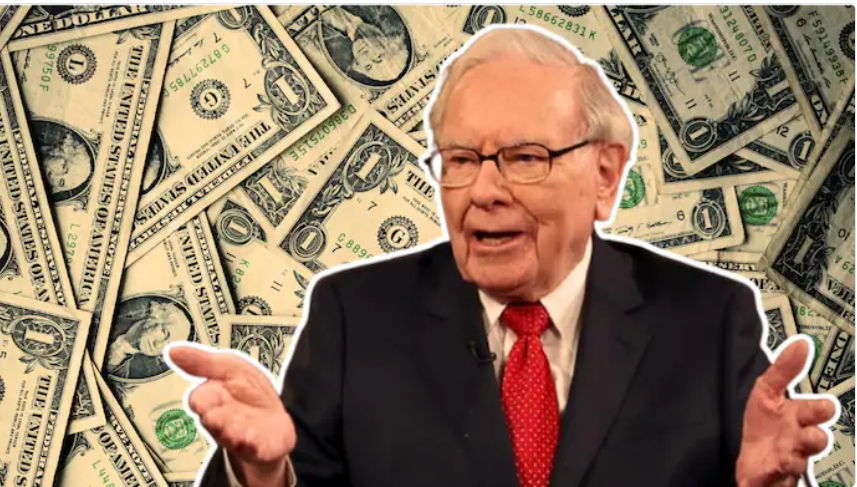
Most people spend their lives chasing money. A few learn how money actually works. And then there is the rare individual who learns how to make money work for him, patiently, consistently, and over a lifetime.
In 1930, in Omaha, Nebraska, Warren Buffett was born into a modest but financially aware household. His father was a stockbroker, and from an early age, Buffett was exposed to numbers, markets, and the quiet logic behind wealth. But exposure alone does not create mastery. Curiosity does.
As a child, he was already experimenting with business. Selling chewing gum, delivering newspapers, and even running small ventures, not for survival, but for understanding. He was not chasing quick wins. He was studying patterns, how value is created, how money flows, and how small gains, repeated over time, begin to compound.
He later studied at the University of Nebraska–Lincoln and then at Columbia University, where he was mentored by Benjamin Graham, a pioneer of value investing. This mentorship would shape Buffett’s philosophy, buy what is valuable, not what is popular, and think long-term when others think short-term.
But his journey was not a straight line of success.
Early in his career, Buffett faced rejection. He applied to Harvard Business School and was turned down. A moment that could have shaken his confidence instead redirected him toward Columbia, where he would meet the mentor who changed his life.
He also made investments that did not go as planned. Decisions that taught him that even with knowledge, mistakes are part of the process. But what defined him was not avoiding failure, it was learning from it without losing discipline.
He went on to build what would become Berkshire Hathaway, transforming it from a struggling textile business into one of the most powerful investment companies in the world. Through Berkshire Hathaway, he acquired and invested in companies across industries, insurance, energy, consumer goods, and more.
What made his approach different was not complexity, it was simplicity with patience.
While others chased trends, Buffett focused on value. While others moved fast, he waited. While others reacted to noise, he trusted long-term fundamentals. Over decades, that discipline turned into one of the greatest wealth-building journeys in history.
But beyond wealth, his story carries another layer, perspective.
Despite becoming one of the richest individuals in the world, Buffett maintained a lifestyle that surprised many. He continued living in the same house he bought decades earlier and emphasized principles over appearances. Later in life, he committed to giving away the majority of his wealth through philanthropy, focusing on impact beyond accumulation.
Like all influential figures, his journey includes criticism, questions about investment decisions, timing, and market influence. But what remains consistent is his philosophy, stay rational when others are emotional, stay patient when others are rushed, and stay disciplined when others lose focus.
This is where the deeper lesson begins.
At Skulearn, we bring stories like this not to glorify wealth, but to understand how it is built, sustained, and used. Skulearn exists to help you think long-term, act intentionally, and build with clarity in a world that constantly pushes for quick results.
Warren Buffett’s journey teaches something powerful. Success does not always come from doing more. Sometimes it comes from doing less, but doing it consistently, correctly, and over a long period of time. It comes from thinking clearly when others are distracted, and from staying grounded when results finally arrive.
Because in the end, his story is not about becoming rich quickly. It is about becoming wise steadily.
And that leaves you with a question worth reflecting on.
What could your life look like if you stopped chasing fast results, and started building something that compounds over time?